UCLA Undergraduate Law Journal
VOLUME 25
25th Anniversary Silver Edition
2025–2026

Meet the Executive Board
-
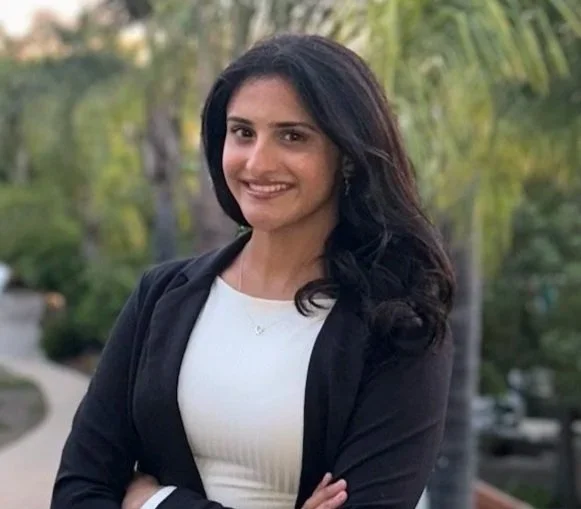
Hillah Greenberg
Editor in Chief | Class of ‘26
Hillah is a senior at UCLA studying Philosophy graduating Spring 2026 with College Honors and Departmental Honors in Philosophy. Hillah is a student ambassador for the UCLA College Honors Programs and tutor at the UCLA Philosophy Undergraduate Writing Center. She aids the director of the UCLA Undergraduate Writing Center in leading workshops and consulting for undergraduate academic journals. Hillah served as an editor for Volume 24 of the Journal and edits and writes for Bruin Political Review. In her role as Editor-in-Chief of the Journal, Hillah has collaborated with the leadership at leading undergraduate law reviews at UC institutions to launch the University of California Undergraduate Law Review, where she now serves as Managing Editor. Hillah writes policy analyses and feature length articles on legislative and policy developments pertaining to privacy and tech law. Her work is published by Bruin Political Review and Los Angeles Magazine. Post-graduation, Hillah will attend law school. Outside of academics, Hillah is passionate about books, coffee, and stationery. In her free time, she visits independent bookstores and specialty cafés.
-
Kalani Castillo
Managing Editor | Editorial Board | Class of ‘26
Kalani is a first-generation, fourth-year undergraduate student at UCLA, double-majoring in Political Science and Chicana/o Studies, with a minor in Labor Studies. She has worked as a Legal Administrative Assistant at the UCLA Immigrant Legal Services Center and completed a legal internship in the summer of 2024 at Taraneh Khorrami’s immigration law firm. Previously, Kalani served as a Senior Editor for Volume 24 of the Journal and Editor for Volume 23. Kalani was also involved in the UCLA Law Fellowship Program, where she gained valuable legal experience by engaging with attorneys, law school professors, and law students. She is a resident of the Central Valley and is interested in protecting the rights of the Latino community. Upon graduation, Kalani plans to attend law school and pursue a legal career in immigration law.
-
Isabella Marasco
Senior Editor | Editorial Board | Class of ‘26
Isabella is a Spring 2026 graduate from the University of California, Los Angeles with a major in Political Science and minors in Film, Television, and Digital Media and English. She served as an editor for Volume 24 of the Journal and as a Senior Editor for Volume 25. She further explored her interests in law through study abroad programs at the University of Cambridge and the London School of Economics, an internship with the Los Angeles District Attorney's Office (Family Violence Division), and her current position as a legal assistant at an entertainment law office. Upon graduation, she will attend the USC Gould School of Law, where she plans to specialize in Entertainment and Media Law.
-
Anton Stover
Senior Editor | Editorial Board | Class of ‘26
Anton Stover is a fourth-year History Major with a triple minor in American Indian Studies, Global Studies, and Public Affairs, interested in Tribal and International Law. Before becoming a Senior Editor at the Journal, he was a writer on Native American treaties in Vol. 24 and an editor in Vol. 23. Outside of the Journal, he is involved in Model United Nations, the Bruin Review, and the History Honors Society (PAT). He would like to thank his fellow editors, writers, and board over the last three years for providing such a valuable experience for him in college as he moves on to law school and his future.
-
Shivanshi Sharma
Senior Editor | Editorial Board | Class of ‘27
Shivanshi is third-year at UCLA studying Neuroscience. She is interested in exploring how an understanding of Neuroscience can enhance our justice system. She is from San Diego, California and enjoys spending time with her family and beagle, drinking coffee, and being active. Upon graduation, she hopes to attend law school.
-
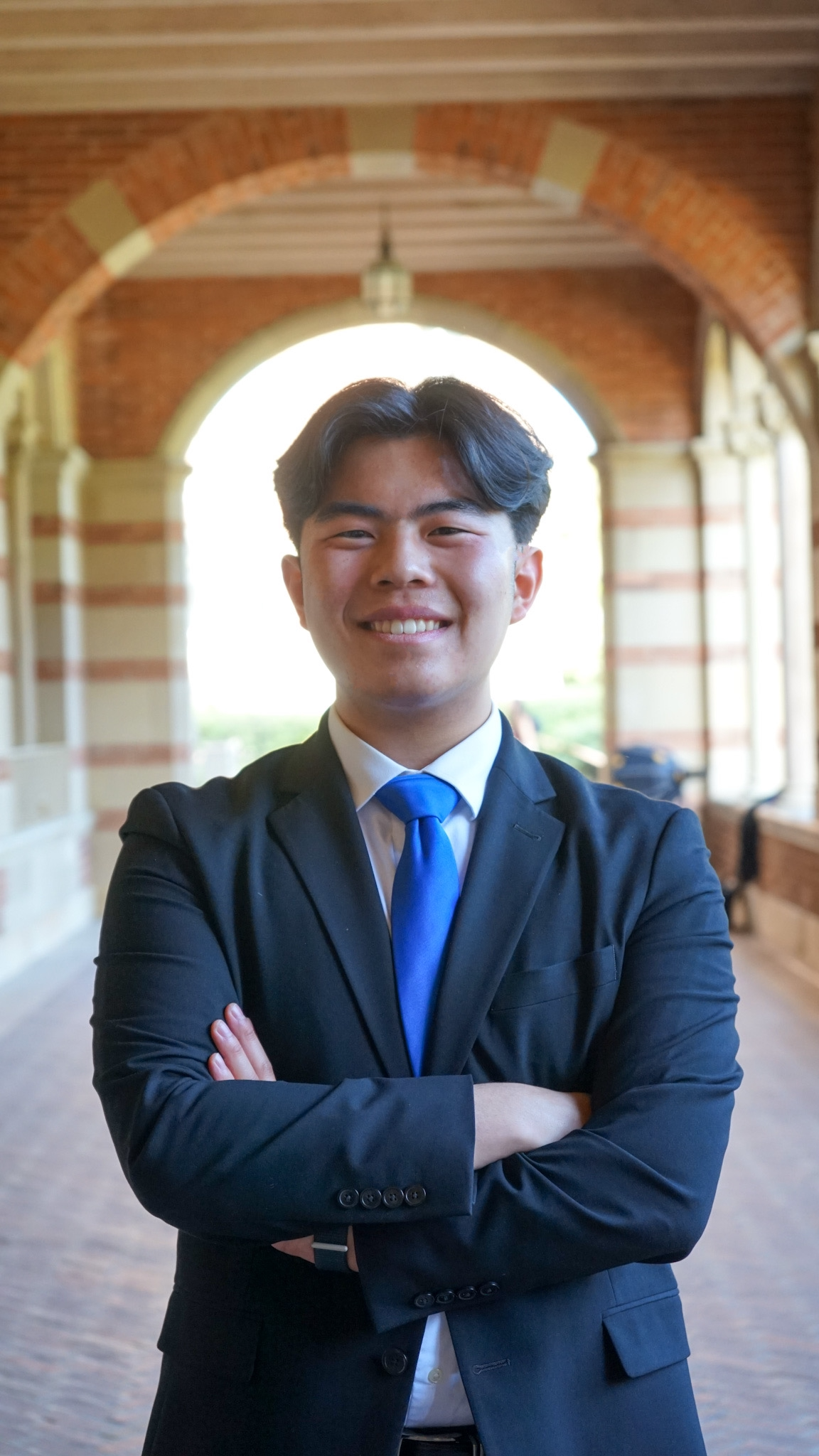
Matthew Inui
Senior Editor | Editorial Board | Class of ‘28
Matthew is a second-year Political Science and Asian American Studies double major and Asian Languages minor at UCLA. Outside of the Undergraduate Law Journal, he serves as the Managing Editor of the AAPI Undergraduate Law Journal and a Senior Editor for the Bruin Political Review. He is also the treasurer of the AAPI Pre-Law Society and as a Finance Coordinator for the Volunteer Income Tax Assistance (VITA) program, which provides free tax services to low-income individuals. After graduation, Matthew plans to attend law school and pursue a career in international law.
-
Emily Zhu
Logistics Officer | Outreach & Engagement Team | Class of ‘28
Emily is a sophomore at UCLA studying Political Science and Cognitive Science. Emily serves as Logistics Officer for the UCLA Undergraduate Law Journal, where she plans and organizes events that bring the legal community together on campus. As Law Forum Director for the UCLA Pre-Law Society, she oversees one of the organization's flagship programs, connecting students with legal professionals and career opportunities. She is a Student Researcher at the Center for Neighborhood Knowledge, exploring questions of urban inequality and community development, and previously interned at Witness to Mass Incarceration, where she wrote on the barriers formerly incarcerated individuals face in rebuilding their lives. She is passionate about using research and storytelling to make complex policy issues more accessible. Post-graduation, Emily plans to attend law school. Outside of academics, she loves choreography, creative media, and reading.
-
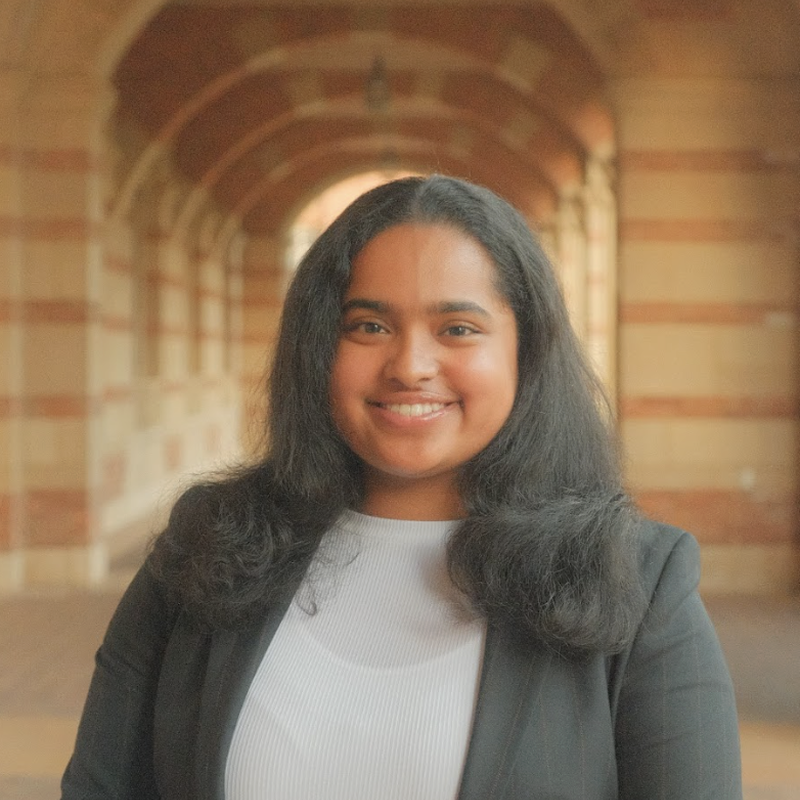
Sarah Suresh
Logistics Officer | Outreach & Engagement Team | Class of ‘28
Sarah is a second-year student at UCLA, majoring in Political Science and Economics with a minor in Entrepreneurship. Previously, she has interned as a Law Clerk at a real estate law firm in San Francisco. This summer, Sarah will work as a logistical intern on a congressional campaign. After graduation, she plans to attend law school, specializing in business and corporate law. Ultimately, she hopes to leverage her skills in economics and law to drive innovative solutions that create positive social impact, particularly in the intersection of corporate strategy and non-profit work.
-
Preston Pham
Communications Officer | Outreach & Engagement Team |
Class of ‘28
-
Jihoo Yoon
Communications Officer | Outreach & Engagement Team |
Class of ‘29
Jihoo is a first-year pre-law student at UCLA, majoring in Public Affairs. She has worked with various youth-led advocacy organizations and is interested in exploring how law intersects with media and influences public perception. In addition to being part of the Journal, Jihoo is part of the Daily Bruin.

Meet the Contributors
-
Tessa Aguilar
Writer
Tessa is a recent UCLA graduate, where she earned a Bachelor's in Political Science, and minors in Global Studies and East Asian Studies. She is currently spending a gap year in South Korea as a David L. Boren Fellow, studying Korean language and regional affairs as part of her research on international political dynamics and the use of soft power through entertainment and media. Alongside these experiences, Tessa is a Don Lavoie Fellow at the Mercatus Center, and operates her own nonprofit, Peach: Cultivating Social Science. During her time at UCLA, she developed her passion for research and advocacy by writing for Aleph and DEMOS, and serving in USAC. Having previously interned for Congress, the White House, and NGOs such as the Committee for Human Rights in North Korea, Tessa has strengthened her interest in the legal dimensions of international affairs and plans to pursue a career in international arbitration, focusing on the negotiation and contractual development of multicultural media across global markets.
-
Usife Ahmad
Writer
Usife is a recent graduate from UCLA, where he studied Political Science & Government.
-
Krisha Bhat
Writer
Krisha is a third-year student at UC Davis majoring in Managerial Economics, and double minoring in Statistics and Technology Management. She is interested in the intersection of artificial intelligence and technology with intellectual property law and hopes to continue to explore this subject in law school upon graduation. Aside from writing for the UCLA ULJ, she works as a volunteer at the UC Davis Imani Legal Clinic and is a research assistant for the UC Davis PAIRR Lab, which is focused on critical AI literacy in university writing education. She also enjoys trying new desserts and restaurants, and dancing on occasion.
-
Marianna Bezhanyan
Writer
Marianna is a senior at UCLA majoring in Design Media Arts with a minor in International Migration Studies. As a first-generation immigrant from Russia, she has worked extensively with refugees and asylum seekers, both as a paralegal at Mason Immigration Law Office and as a legal intern with the International Rescue Committee. After graduating, Marianna will join Latham & Watkins in its Washington, DC office as a pre-law intern before beginning her studies at Duke University School of Law, where she will pursue a JD/LLM in International and Comparative Law. Her interests include interagency data sharing, sanctions, and export controls, alongside a parallel focus on human rights protection and refugee integration.
-
Eugene Choi
Editor
Eugene is third-year at UCLA studying Cognitive Science and Professional Writing. Drawn to questions of legal reasoning, moral judgment, and decision-making, she serves as Editor for two student-led academic journals in law and psychology, where she helps authors develop publication-ready scholarship. Beyond editing, Eugene has presented research on mental immunity at the Western Psychological Association, and annually grades for the John Locke Institute’s Global Essay Competition, where she won First Prize for her essay on utilitarianism. This summer, she will serve as a Judicial Intern at the Los Angeles Superior Court, and will continue working as Law Clerk in the District Attorney’s Office, where she drafts clemency-related correspondence to the Governor of California. Captivated by jurisprudence and the cognitive dimensions of criminal law, Eugene plans to attend law school.
-
Ava Clovis
Editor
Ava is a second-year student at UCLA, majoring in Political Science with a minor in Professional Writing. She has previously interned at a boutique firm specializing in real estate and hospitality law. This summer, she will intern at a corporate law firm in San Diego. After graduation, she plans to attend law school, where she hopes to study administrative and regulatory law, with an interest in how legal frameworks shape public policy and institutional decision-making.
-
Isabel Gonzalez
Writer
Isabel Gonzalez is a second-year undergraduate student at UCLA, double-majoring in Political Science and Public Affairs, with a strong academic focus on legal institutions, criminal procedure, and public policy. She is currently in Sacramento through the UC Center Sacramento (UCCS) program, where she interns with the California Department of Justice and gains direct experience in state-level legal and policy work. Isabel is also a staff writer for the Bruin Political Review, where she produces feature-length analyses on economic policy, international affairs, immigration policy, and California ballot measures. In addition, she serves as Vice President of UNICEF at UCLA, where she leads advocacy and fundraising initiatives that support global child welfare efforts. Isabel is an aspiring criminal attorney and plans to become a certified paralegal as she prepares to attend law school and pursue a career in criminal law.
-
Justin Halprin
Editor
Justin is a second-year student at UCLA studying Political Science and European Studies. He is interested in securities fraud, surveillance law, and international relations, and plans to attend law school in pursuit of these interests. Justin has worked as a legal assistant in France with Ollyns and is a writer for the Bruin Political Review. As president of TAMID at UCLA, he has developed a strong interest in the role of finance in international relations and foreign business diplomacy. He is also actively engaged in political advocacy on Capitol Hill, particularly on issues related to defense and humanitarian issues.
-
Tatiana Hartoonians
Editor
Tatiana is a first-year student at the University of California, Los Angeles majoring in English. Alongside her participation in the Journal, she also serves as an editor for the Armenian Undergraduate Law Journal. Tatiana plans to attend law school following graduation and is especially interested in exploring the intersection between philosophy, technology, and law. Beyond her academic pursuits, she enjoys creative writing, dancing, and reading.
-
Liana Harutyunyan
Editor
Liana is a 2025 UCLA graduate with Bachelor of Arts degrees in Psychology and Political Science. She has gained experience in the legal field throughout her education at UCLA by volunteering with the Los Angeles District Attorney’s office as well as interning with JusticeCorps to provide legal information to low-income litigants. She was also part of the executive board of Legal Underground, a student organization at UCLA aiming to provide support and resources to pre-law students. She is currently a legal assistant at a workers’ compensation law firm and is planning to continue her studies in law school in hopes of pursuing a career in business or labor law.
-
Tiffany He
Editor
Tiffany is a third-year English and Statistics & Data Science double major at UCLA. She is interested in exploring the intersections of technology and law, and particularly how quantitative methods can serve as a research tool in law. She is also a research assistant at Dr. Keel's BioCritical Studies Lab and an intern at KPFF Consulting Engineers. In the future, she hopes to pursue a career in technology and privacy law.
-
Martin Huang
Writer
Martin is a second-year student at UCLA double-majoring in Public Affairs and Psychology. He serves as a research assistant at Luskin and as captain of the UCLA Debate Union, where he explores his interests in regional inequality, international relations, and education rights. During the summer of 2026, he will work as a legal assistant at a law firm in Shanghai. Post graduation, he plans to attend law school and pursue an intersectional career in education and labor & employment law.
-
Sukhmani Kaur Kakar
Editor
Sukhmani is a fourth-year student at UCLA majoring in Public Affairs and Chinese. She has spent most of her summers interning for nonprofit and public interest organizations, leading to her pursuit of immigration law and international human rights post-graduation. She is currently working as a Legal Intern at the Tenants Law Firm as part of her Public Affairs Capstone project. This is her first year serving as an editor for the Journal. Outside of her academic pursuits, she enjoys dancing, reading, and exploring Los Angeles. Sukhmani will be attending Berkeley Law School in Fall of 2026.
-
Benjamin Katz
Writer
Benjamin is an undergraduate student at the University of California, Los Angeles, where he studies Economics and Philosophy. At UCLA, Benjamin serves as Managing Editor of Ha’Am, UCLA’s Jewish newsmagazine. He works as an undergraduate student tutor for ‘PHILOS 31: Logic, First Course’ to help students with symbolization, truth tables, derivations, and invalidity proofs. He has also worked with the AMCHA Initiative, where he investigated and documented antisemitic and anti-Israel incidents on American university campuses, and with the Jewish Publication Society, where he contributed to new publishing initiatives in Jewish and Israel Studies. Benjamin currently serves as a Teaching Assistant at the Tikvah Fund, where he helps introduce students to foundational works in Jewish, political, and philosophical thought. His academic interests include philosophy of religion, Jewish thought, ethics, and the relationship between classical education and Jewish learning.
-
Krttika Kumar
Writer
Krttika is a second-year undergraduate at UCLA, pursuing a double major in Neuroscience and Philosophy with a minor in History. She intends to pursue a legal career in international law, with a particular focus on human rights and gender-based advocacy. Her academic and professional interests center on the intersection of legal systems, bioethics, and global health, as they relate to women’s health and disparities in access to care. She has gained early experience in legal and policy environments through her work with the Los Angeles County District Attorney’s Office, where she contributes within the Sex Crimes Division, and as an intern on California State Senator Ben Allen’s campaign for Insurance Commissioner. Krttika is driven by a desire to engage the law as a tool for accountability and to advance rights-based approaches to addressing gendered harms on a global scale. In her free time, she enjoys playing the piano, reading, and creative writing.
-
Nikolas Opolyar-Warren
Writer
Nikolas is a first-year undergraduate student at the University of California, Los Angeles, pursuing a double major in Political Science and History with a pre-law focus. His academic work focuses on Political Science and History, examining structures of power, inequality, and movements for social change, with an interest in revolutionary movements and radical political thought. His legal interests and work focus on using the law to support others and challenge injustices within the legal system, with particular attention to defendants’ rights, due process, and the limits of state power. At UCLA, he works at the Prison Education Program and Center for Justice, where he contributes with legal research, program development, and outreach efforts related to incarceration and reentry. He previously interned at the Law Office of Mark A. Reed in San Diego, where he assisted with case preparation and legal research. He plans to pursue a career in criminal defense and civil liberties law and engage in litigation that challenges the death penalty to expand protections for defendants. Outside of his academics, he is interested in fashion and spends time surfing and skating.
-
Sofia Sheremet
Editor
Sofia is a first-year History and Russian Studies major at UCLA. Sofia is a contributor for The Daily Bruin, an event coordinator of the Russian Student Speaking Association Club, and an outreach volunteer for the UCLA Luskin History and Policy podcast Then & Now. Previously, Sofia freelanced for the Los Angeles Daily, interned with the LA Times' High School Insider and served as the editor-in-chief for the Pacemaker-winning Pearl Post student newspaper. Sofia is interest in continuing her passion for editing throughout her time at UCLA.
-
Sophie Shi
Editor
Sophie is a second-year Political Science and Statistics & Data Science student at UCLA. She is interested in exploring the intersections between Philosophy, Law, Data, and Ethics. Beyond her contributions to the Journal, Sophie also serves as a slot editor at the Daily Bruin and has engaged in policy and legal research through both congressional and public interest internships. Upon graduation, she hopes to attend law school. Outside of her professional and academic pursuits, Sophie enjoys exploring new cuisines and traveling with friends and family.
-
Savannah Shuman
Writer
Savannah is a second year Political Science and Interdisciplinary Honors student at the University of Washington in Seattle. In addition to writing for the Journal, Savannah has been published in the University of Washington Journal of Political Science. She has particular interest in the intersection between constitutional law and social justice. After graduation, Savannah plans to attend law school and become a trial attorney.
-
Evrim Tuncel
Editor
Evrim is a fourth-year History major and Professional Writing minor at UCLA interested in exploring the intersection between history, migration, and law. She has cultivated a global perspective through her work as a grant writer at Human Migration Institute, a migrant-serving nonprofit, and her time as a project management intern at NGO NEST Berlin. On campus, Evrim is a Peer Learning Facilitator (PLF) and a PLF Supervisor at UCLA’s Undergraduate Writing Center. She also serves as the Communications and Operations Director of UCLA’s Fashion and Student Trends organization. After graduation, Evrim intends to pursue law and hopes to specialize in immigration and refugee law.
-
Soft Power, Hard Law: A Relational Approach to Reconciling Trade and Cultural Governance in Global Streaming Platform Regulation
Writer: Tessa Aguilar | Editor: Sophie Shi
Abstract: Throughout the preceding decade, global streaming platforms have rapidly developed into central arbiters of both culture and commerce. Once viewed merely as entertainment distributors, these services now act as de facto ambassadors of national identity and ideology, shaping how culture travels globally. Alongside this organized access to expression, a regulatory gap arises, where private corporations exercise significant control over cultural flows without transparency and legal responsibility. This article contends that the current international legal structure exhibits an architectural asymmetry between the trade law, demonstrated throughout the World Trade Organization’s binding enforcement of the General Agreement on Trade in Services (GATS), and the cultural regulation through the non-binding, coordinative framework of the 2005 UNESCO Convention on the Protection and Promotion of the Diversity of Cultural Expressions. International law remains constrained by outmoded categories that fail to capture the functional reality of digital intermediaries. To resolve such a doctrinal divide, the article introduces the Soft Power Governance Model (SPGM). This interpretive framework reconceptualizes platform activity through relational sovereignty and as an adjudicable means to promote and protect soft power initiatives via global streaming platforms. The model additionally establishes cultural governance as a coequal regulatory interest entitled to independent legal significance in trade disputes. The SPGM provides a principled method to operationalize platform design negligence and reconcile market deregulation with the preservation of global cultural plurality.
-
Deepfakes, Digital Consent, and Non- Consensual Harm: Redefining Sexual Exploitation in the Age of Artificial Intelligence
Writer: Usife Ahmad | Editor: Sofia Sheremet
Abstract: This article examines a series of deterrence strategies employed by public universities, where the misclassification of political speech as discriminatory harassment under Title VI of the Civil Rights Act of 1964 suppresses otherwise protected First Amendment expression. The adoption of expansive interpretive frameworks by public universities such as the International Holocaust Remembrance Alliance’s (IHRA) working definition of antisemitism, alongside administrative mechanisms including surveillance, investigation, and discretionary information-sharing with federal agencies, function to violate student rights. This study argues that this regulatory convergence produces a constitutional chilling-effect on expression, where silence is manufactured through a “process as punishment” model: the burden of investigation itself deters speech. This coupled with mechanisms such as the heckler’s veto supply a pretext for “campus safety” and “neutrality” that aim to further that mission. Analyzing recent litigation and institutional responses to pro-Palestine advocacy and critiques of the state of Israel and Zionism, this article concludes that public universities have increasingly prioritized risk management and federal compliance over constitutional safeguards. This prioritization threatens the university’s foundational role as a forum for political contestation and the exchange of unpopular ideas.
-
The IRS and ICE Memorandum of Understanding of April 2025
Writer: Marianna Bezhanyan | Editor: Liana Harutyunyan
Abstract: Since the enactment of the Tax Reform Act of 1976, 26 U.S.C. § 6103 has established tax return confidentiality as the default rule of federal tax administration, which permits disclosure only through narrowly defined statutory exceptions. Congress designed this “firewall” by understanding that voluntary compliance depends on credible assurances of confidentiality. The April 7, 2025, Memorandum of Understanding (MOU) between the Internal Revenue Service (IRS) and U.S. Immigration and Customs Enforcement (ICE) places that framework under strain. The IRS-ICE MOU relies on § 6103(i)(2), which authorizes limited disclosures for non-tax criminal investigations, to permit the sharing of taxpayer address information for immigration enforcement purposes. Although the agreement is formally limited to individualized requests tied to criminal investigations, its implementation has prompted significant statutory and institutional concerns. Litigation has revealed that tens of thousands of addresses were disclosed pursuant to the IRS-ICE MOU and that a portion of those disclosures failed to satisfy statutory requirements. This Article argues that the IRS-ICE MOU exceeds the scope of § 6103(i)(2), undermines the credibility of the confidentiality regime that supports voluntary tax compliance, and signals a broader shift toward expanded executive authority and increased interagency centralization without legislative authorization. Whether ultimately sustained or invalidated, the controversy surrounding the IRS-ICE MOU underscores the importance of statutory firewalls in maintaining institutional boundaries and public trust.
-
Intellectual Property and Liability in Acquisitions of Startups Built on Open-Source Large Language Models
Writer: Krisha Bhat | Editor: Tatiana Hartoonians
Abstract: Acquiring a startup built on an open-source large language model may be an attractive path to gain innovative technology at a lower cost than internal production, but in reality, it often means buying a stack of unresolved intellectual property questions. Standard open-source rules do not cleanly address how to handle the transfer of intellectual property rights, calculate deal value, or secure the buyer and seller against latent claims or future indemnities in a transaction. These uncertainties create latent copyright and licensing exposure that traditional representations, covenants, and indemnities are not designed to resolve. This article argues that, in deals for startups built on open‑source LLMs, buyers and sellers should treat the model, training data, and licenses as separate assets with separate licensing conditions; adjust due diligence to address license violations and third‑party claims; and craft an acquisition agreement so that these AI‑specific risks are clearly protected against, and proposes a new form of checklist to do so. -
The U.S. Plea Bargaining System as a Form of Coerced Consent
Writer: Isabel Gonzalez| Editor: Ava Clovis
Abstract: In the United States, criminal adjudication is defined not by jury trials, but by plea bargaining, which resolves more than ninety five percent of convictions. Although the Supreme Court requires guilty pleas to be entered “knowingly, voluntarily, and intelligently,” this article argues that the modern plea system operates as coerced consent. The Court adopted an overly broad conception of voluntariness, limiting coercion to physical force or unlawful threats while permitting structural pressures that dominate plea negotiations, where prosecutors control charging decisions, sentencing exposure, and enhancements. This authority allows the state to manufacture risk through three interlocking mechanisms. First, the trial penalty creates severe disparities between plea offers and post-trial punishment. Second, charge stacking multiplies overlapping counts from a single course of conduct, compounding exposure. Third, pretrial detention confines defendants during negotiation, converting liberty into leverage. Since plea agreements are binding exchanges in which defendants surrender constitutional trial rights for sentencing concessions, in this article, I propose a structured doctrinal test grounded in contract law’s principles of duress and unconscionability. Duress would require courts to determine whether prosecutorial threats—enhanced sentencing exposure, stacked charges, or continued detention—constrain the defendant’s options to the point where pleading guilty becomes the only rational choice. Unconscionability would require scrutiny of both process and outcome, asking whether extreme disparities in power, information, and punishment rendered the agreement fundamentally one sided. Under this framework, guilty pleas would be enforceable only when consent is genuine in substance as well as form, restoring voluntariness to what the Constitution originally demands.
-
The Adversaries of Ambiguity: Legal Vagueness, Prosecutorial Discretion, and Juvenile Culpability under China’s Amendment XI
Writer: Martin Huang | Editor: Sukhmani Kakar
Abstract: In March 2021, China enacted Amendment XI to its criminal law, introducing an exception to the country’s minimum age of criminal responsibility that permits the prosecution of children aged 12 and 13 for certain “especially serious” crimes. Framed as a response to extreme juvenile violence, the amendment addresses growing public concern over youth crime and preserves the protective orientation of China’s juvenile justice system. This article, however, argues that Amendment XI represents a doctrinally indeterminate and normatively unstable reform that exposes younger children to criminal prosecution without adequate legal constraints or procedural safeguards. Through a close doctrinal analysis, this article demonstrates that the amendment’s reliance on vague statutory language delegates excessive discretion to prosecutors and courts. It further shows that the current legal system fails to establish a uniform, binding package of protections proportional to the severity of criminal liability imposed on children at such a young age. Drawing on Chinese scholarship, judicial materials, and comparative juvenile justice literature, this article situates Amendment XI within broader critiques that punitive responses to juvenile violence are often shallow and performative, failing to address the structural causes of crime, such as family disruption, school bullying, and unmet mental health needs. Finally, this article advances a normative critique grounded in international juvenile justice standards, emphasizing a high and uniform minimum age of criminal responsibility that prioritizes rehabilitation over punishment. The article concludes by proposing statutory, procedural, and institutional reforms aimed at restoring predictability of criminal law codes, strengthening child-centered safeguards, and aligning China’s juvenile justice framework with both domestic and international commitments.
-
Neutrality After Lemon: History, Tradition, and the Establishment Clause
Writer: Benjamin Katz | Editor: Justin Halprin
Abstract: This paper argues that the Supreme Court’s abandonment of the Lemon test in Kennedy v. Bremerton School District reflects not merely a doctrinal correction, but a deeper jurisprudential transformation in Establishment Clause interpretation. After tracing the origins of Lemon v. Kurtzman and its three-part inquiry into secular purpose, primary effect, and excessive entanglement, the paper contends that each prong failed because it rested on an unstable and underdeveloped conception of religious neutrality. The purpose prong required courts to speculate about legislative motives, the effect prong invited conjecture about hypothetical religious advancement, and the entanglement prong expanded from a concern with sustained governmental control into a generalized suspicion of church-state interaction. Together, these failures show that Lemon did not successfully discipline judicial discretion, but instead displaced contested judgments about religion’s place in public life into the language of abstract neutrality. The paper then situates Kennedy as a shift away from this rule-centered approach and toward a historically grounded method of constitutional interpretation. The paper concludes by arguing that, by replacing Lemon with an inquiry rooted in history and tradition, the Court moved from a vision of neutrality as separation to one of neutrality as continuity with American constitutional practice.
-
Rethinking Consent: Sterilization and Coerced Consent in Twentieth-Century America
Writer: Krttika Kumar | Editor: Evrim Tuncel
Abstract: This article argues that U.S. courts have systematically misconstrued consent in sterilization cases by treating it as a matter of procedural compliance rather than a substantive safeguard of reproductive autonomy. In the latter half of the twentieth century, thousands of women underwent sterilization under conditions that compromised meaningful choice. Yet, courts evaluating these claims have focused narrowly on whether formal consent requirements were satisfied, often deferring to signed documentation while overlooking the institutional and structural pressures that shaped decision-making. Through analysis of Relf v. Weinberger (1974) and Madrigal v. Quilligan (1978), this article demonstrates how judicial reliance on formal authorization obscures coercion and shields medical and state actors from accountability. Situating these decisions within the broader legacy of eugenics and federal family planning programs, it identifies a doctrinal gap in how voluntariness is assessed. The article then advances a reconceptualization of consent founded on constitutional principles of due process and bodily integrity, and proposes a contextual framework that accounts for factors such as timing, comprehension, institutional dependency, and provider authority. By reframing consent as a substantive inquiry, this article argues that the United States legal system can better identify and address structural coercion in reproductive decision-making.
-
Allocating Ambiguity: The Redistribution of Statutory Uncertainty and Risk in Modern Criminal Law
Writer: Nikolas Opolyar-Warren | Editor: Eugene Choi
Abstract: The rule of lenity is a long-standing principle in American law that instructs courts to resolve statutory ambiguity in favor of the defendant. Although the doctrine is not explicitly codified in the U.S. criminal code or the Constitution, it is rooted in foundational constitutional provisions including separation of powers, fair notice, and due process. Yet, despite its frequent invocation and rhetorical prominence, modern courts increasingly relegate lenity to a “last resort” canon, applying it only after exhausting all other interpretive tools. This article identifies a growing disconnect between the rule of lenity’s constitutional justifications and its constrained application in modern criminal jurisprudence. Drawing on Supreme Court opinions, circuit, appellate, and state court decisions, this article demonstrates that lenity is rarely applied in a manner that meaningfully safeguards defendants from prosecutorial and legislative overreach; instead, it is routinely subordinated to competing interpretive methodologies. Consequently, courts produce outcomes in which lenity is formally invoked but operationally inert. This article argues that the modern instability of the rule of lenity stems the judiciary's increasingly restrictive conception of how and when the doctrine may be applied, which weakens lenity's ability to serve as a meaningful constraint on the expansion of criminal liability: thereby placing defendants’ liberty and due process rights at risk. This article calls for a recalibration of when courts permit the doctrine to operate.
-
Limitations on Protections for Persons with Disabilities in Detention
Writer: Savannah Shuman | Editor: Tiffany He
Abstract: The Americans with Disabilities Act, Section 504 of the Rehabilitation Act, and the United States Constitution provide a broad spectrum of protection for persons with disabilities in detention. The law requires not only non-discrimination but also reasonable accommodation for these individuals. This article focuses on prisons and ICE facilities to show how two categories of barriers, legal limitations and practical limitations, prevent detained individuals with disabilities from accessing the rights to which they are entitled. Legal limitations stem from legal decisions that have narrowed the scope of protections for people with disabilities, creating loopholes that restrict the application of protective laws. Practical limitations arise from the actions of institutions, such as the use of solitary confinement and the lack of access to rehabilitation programs for persons with disabilities. This article argues that current interpretations of disability rights legislation are far too broad, allowing room for discriminatory action. Further, courts should more rigorously evaluate facility action based on evolving standards of decency to ensure that these rights are upheld in practice.